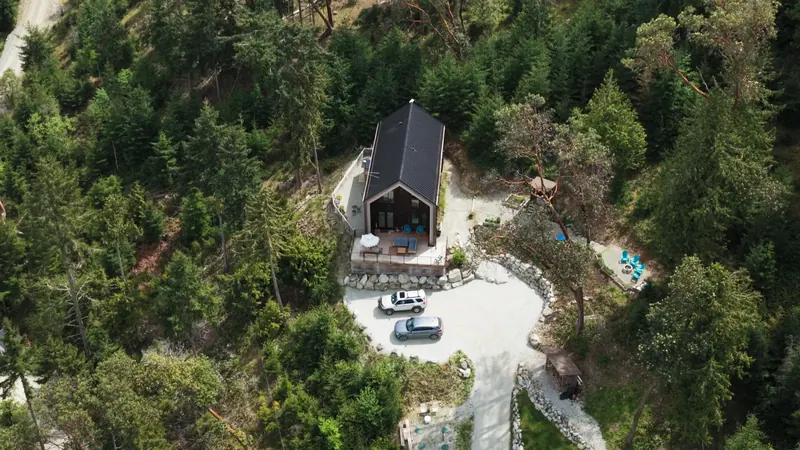
Starlink in rural West Virginia and Appalachia: hills, trees and a clear sky
Ordering happens on Starlink's site. Starlink sets the referral credit for first-time customers, currently $100 in the U.S.
West Virginia and the wider Appalachian region are often near the top of lists of places where a wired broadband option is thin or missing. That does not mean every hollow already has a perfect Starlink shot. Hills and timber block the sky the same way they block a cell tower, and a winter outage will take the kit offline unless you have power behind it.
This page is a regional companion to the national rural guides: switching to Starlink, rural setup, and Starlink in rural Texas. The Texas page is about a different landscape. This one is about steep ground, tree cover and unreliable power.
Why this region shows up in the broadband data
Federal Communications Commission map data for mid-2026, in a revision published that November, showed West Virginia among the states with the highest share of locations where satellite was the only service reported. That is a map of what providers have filed, not a promise about your driveway. County and address tools on the official broadband map are the right place to look up a specific property.
The practical meaning is simple. In a lot of these communities, the alternatives are an aging copper line, a fixed-wireless signal that fades behind the next ridge, a phone hotspot, or nothing. Starlink is one of the options that does not need a local wire or a nearby tower. It does need sky and power.
Hills and timber are the installation problem
A house in a narrow hollow can have 'coverage' and still fail an obstruction check. The ridgeline that keeps the wind off the porch may also hide a large part of the sky. Tall hardwoods in leaf, or a dense stand of evergreen, will do the same.
Before you order, or as soon as the kit arrives, use the app's obstruction tool at the actual spots you can mount: a ridgeline of the roof, a pole in the yard, a cleared knoll above the house. A short walk uphill is sometimes worth more than a longer cable. Rural setup covers poles, pipes and long runs, and getting service to a barn covers a second building.
- Check the sky, not just the county. A clear ridge two hundred feet from the house may be the real install.
- Winter and summer differ. A site that looks open in January can close in when the leaves come back.
- Do not count on a neighbor's experience if their house sits higher or in a wider bench of the same hollow.
Power, winter and storms
Outages are part of rural mountain life. Starlink will not carry you through one without a battery, an inverter or a generator. If you already keep a generator for the well pump and the freezer, plan how the kit shares that power, and how the dish stays clear of snow. The Standard kit is designed to melt snow at a published rate, but a buried or slide-hit dish is still a problem, and the kit does not run without power.
Ice on trees is a double risk: it can knock out the electric line and drop limbs onto a poorly placed kit. A mount that is sound in October needs another look after the first ice storm.
If you already live with long outages, think about the kit the same way you think about the well pump: how long can it sit dark, and what do you start first when the generator comes on. A small battery or an inverter that can cover the dish and the router is often enough to finish a call or to check a forecast. You do not need a special brand; you need a clear plan and a load you have actually measured, or at least checked against Starlink's published average power draw for the kit you own.
Plans, prices and a fair test
Most primary homes here want a Residential plan, not Roam. On November 26, 2026, Starlink's service-plans page listed U.S. Residential 100 Mbps at $55 a month, 200 Mbps at $85, and Residential Max at $130, with the two lower plans capped at those speeds and offered only in select areas. Your address decides what you are offered. Hardware is extra.
Starlink advertises a 30-day trial with a refund if you are not satisfied, under its current terms. Use that window to test the sky at the real mount, a few video calls, and if you can, a stretch of weather. If a local WISP or a 5G Home plan is also on the table, the comparison page will help you line them up. If the phone company is retiring the copper line, see when rural DSL ends.
Looking up your address?
See which plans your Appalachian address can get
Enter the service address on Starlink's order page for current Residential prices and hardware. Then test the sky; the hollow and the timber have the last word.
Click to get your $100 credit (new tab to Starlink's site)
About the credit: if you've never been a Starlink customer, ordering Residential or Roam through this link can earn a reward from Starlink after two months of service. It's $100 in the U.S. right now, as bill credit or cash, and Starlink sets the terms.
Check Starlink for the actual property
Use the service address on Starlink's order page, then judge the install by the sky over that house, not by the county average.
Click to get your $100 credit (new tab to Starlink's site)
About the credit: if you've never been a Starlink customer, ordering Residential or Roam through this link can earn a reward from Starlink after two months of service. It's $100 in the U.S. right now, as bill credit or cash, and Starlink sets the terms.
West Virginia and Appalachia questions
Is Starlink available everywhere in West Virginia?
Availability is by address, not by state. Check Starlink's map and order page for the property, and run an obstruction check at the real mount.
Will it work in a hollow?
It might, if a roof, pole or nearby knoll can see enough sky. A deep, tree-lined hollow is one of the harder sites. The app is more useful than a guess.
What about winter ice and snow?
The Standard kit is designed to melt snow, but it needs power, and it cannot help if a slide or a limb moves the dish. Plan the mount and the backup power before the storm.
Is this a substitute for a BEAD or state broadband grant?
No. Public programs have their own rules and timelines. Starlink is a service you can order now, on its own terms, and it is not a government benefit.
Should I wait for fiber?
If fiber is truly being built to your house on a date you believe, that can be worth waiting for. If 'coming soon' has been the story for years, a 30-day Starlink trial is a way to get service in the meantime without pretending it is fiber.
Never had Starlink?
A $100 Starlink credit for new rural customers
If the farmhouse is getting Starlink for the first time, place the order through the button below and Starlink can put a $100 credit on the account after two months of service. Nothing about the price changes.
Click to get your $100 credit (new tab to Starlink's site)
My referral code rides along with that button, so I may receive a referral benefit too. The terms belong to Starlink, which can revise them. More on how the Starlink referral code works.