
Why Starlink keeps getting better in the country
Ordering happens on Starlink's site. Starlink sets the referral credit for first-time customers, currently $100 in the U.S.
If you farm, ranch or live down a long gravel road, you've probably heard that Starlink gets better over time. That's mostly true, and the reason is simple: new satellites keep going up, and every launch adds capacity. This page explains how that works, what the November 2026 numbers say, and the limits that no launch can fix for you.
The short version: launches improve the network, but they don't move your barn out of the dish's way. Both halves matter on a rural property.
Dated figures
Growth, in numbers
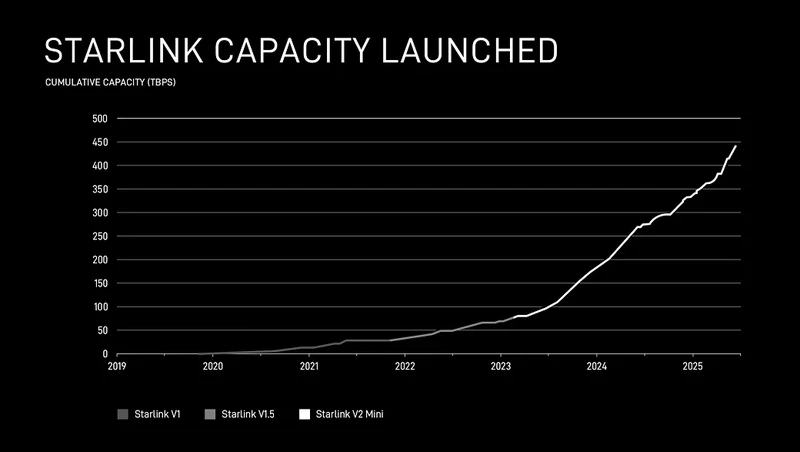
- About 440 Tbpsof cumulative capacity launched by mid-2025, per Starlink's own chart
- 2,300+satellites added in the year to July 2025, per Starlink's network update
- 87Starlink launches in 2026 through Nov 25, per the tracker The Space Road
- 11,195satellites in orbit on Nov 26, 2026, per Jonathan McDowell's tracker
Capacity is the total data the satellites can carry. It isn't the speed you'll see, which depends on your plan, your dish's view and how busy your area is.
Coverage and capacity are different things
Coverage asks whether a satellite can reach your property at all. For most of the United States the answer has been yes for a while: Starlink reported service at 99.7% of U.S. homes and businesses in its FCC filing as of June 30, 2026.
Capacity asks whether there's room for one more customer in your area and how fast the network feels when your neighbors are online. That's what launches improve. Starlink's chart of capacity launched stays under about 100 Tbps until mid-2023, then climbs steeply as larger batches of upgraded satellites start flying.
How a launch adds capacity
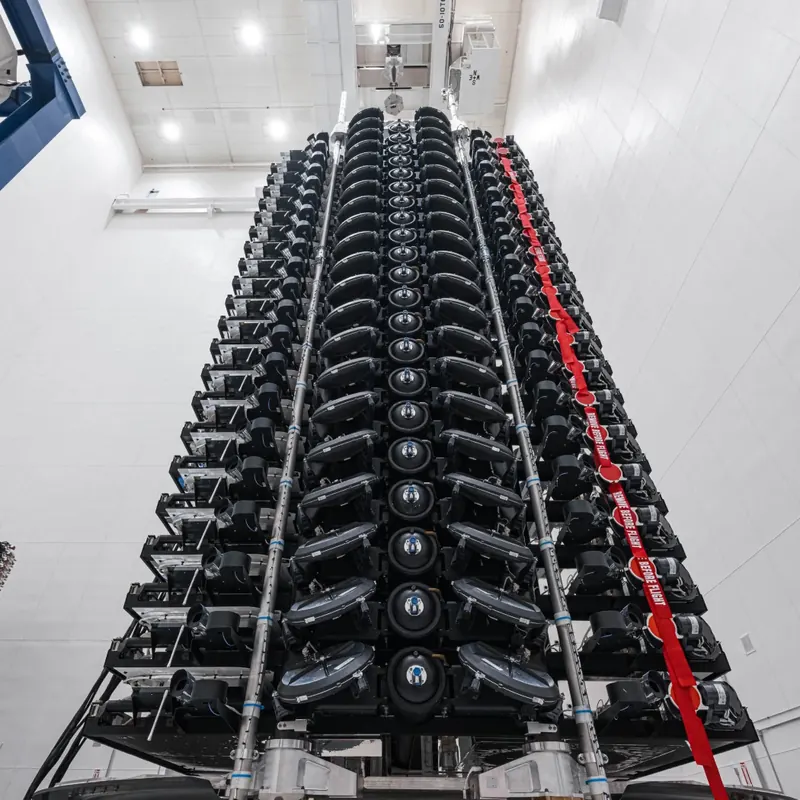
A Falcon 9 rocket typically carries a few dozen Starlink satellites packed in a flat stack. One tally, from the site Space Osmosis in early November, put 2026's Starlink launches at roughly 26 satellites apiece. After release, the satellites use their own thrusters to climb to working height, which takes weeks, so new capacity arrives gradually.
Starlink says its next-generation V3 satellites, designed to carry about 10 times the downlink data of the current ones, will fly on Starship, and that a Starship launch should add about 20 times the capacity of a Falcon 9 launch of the current design. The first 26 V3 satellites were deployed at the end of September 2026. These are design goals, and it's early.
A short timeline of how the network has grown
| When | What happened | Source |
|---|---|---|
| May 2019 | The first 60 test satellites launched. | Jonathan McDowell's Starlink tables |
| Jul 2025 | In the previous year, Starlink added 2,300+ satellites across 100+ launches, and said it was investing in gateways and its network backbone. | Starlink network update |
| Sept 2026 | The first 26 V3 satellites were deployed from Starship. | Starlink updates page |
| Sept 30, 2026 | 13.6 million consumer subscribers in 174 markets, with 11,100+ satellites in orbit. | SpaceX third-quarter report, as covered by Fierce Network |
| Nov 26, 2026 | 11,195 satellites in orbit, 11,181 working, 13,122 launched in all. | Jonathan McDowell's tracker |
Satellite counts differ slightly between trackers because of how they treat satellites that are retiring.
Launches and factories, in SpaceX and Starlink photos
Everything that improves rural service starts in a factory and on a launch pad. These images come from SpaceX and Starlink.
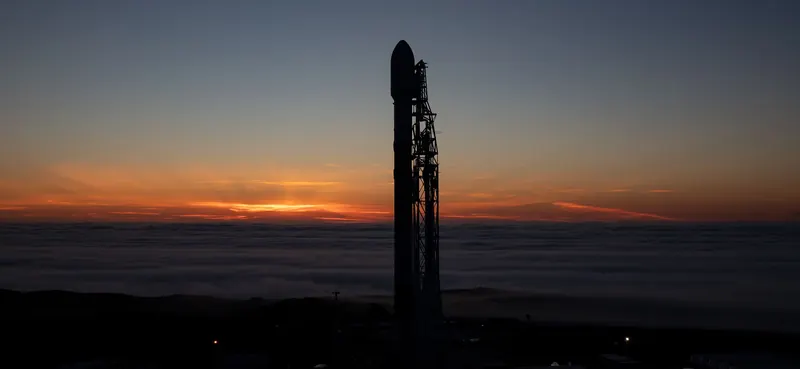
A rocket on its pad at sunset. Image: SpaceX. 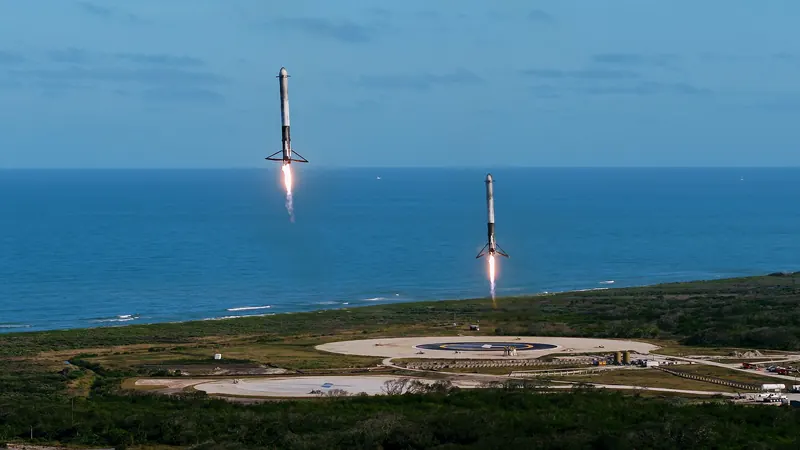
Two boosters landing after a launch. Image: SpaceX. 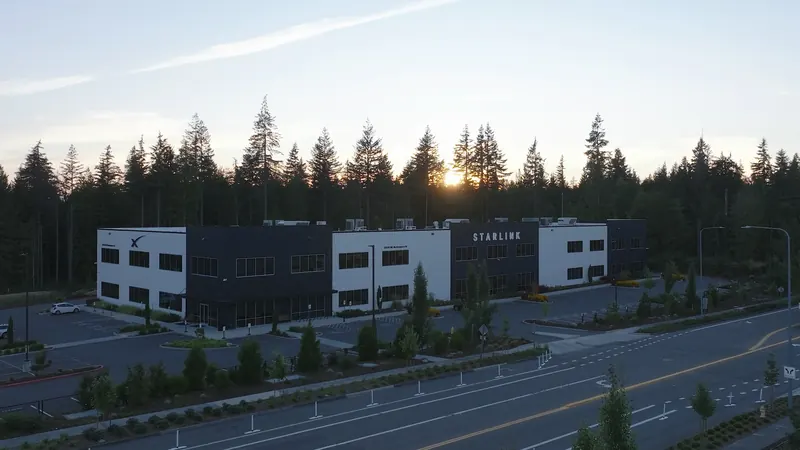
A Starlink facility in Redmond, Washington. Image: Starlink.
Check your address
See what your property can get
Starlink's order page checks your address, shows the plans and hardware price, and tells you if your area is limited.
Click to get your $100 credit (new tab to Starlink's site)
About the credit: if you've never been a Starlink customer, ordering Residential or Roam through this link can earn a reward from Starlink after two months of service. It's $100 in the U.S. right now, as bill credit or cash, and Starlink sets the terms.
The honest part: launches have slowed lately
Starlink launches have not been steady all year. The Space Road's monthly counts run 9, 11, 13, 9, 8, 10, 8 and 10 from January through August, then 4 in September, 4 in October and 1 so far in November. Two of those launches were Starship flights, one in September and one in November. The last Starlink launch from Florida on that tracker was Aug 25, and Falcon 9 flights since then have left from California.
A slower stretch doesn't mean service is getting worse. The satellites already in orbit keep working, and old ones are being retired as new ones arrive, which is why the in-orbit count has hovered around 11,200 since early November. It does mean that big capacity jumps are now tied to Starship's V3 launches rather than to a steady drip of Falcon 9 flights.
What a farm or ranch still has to get right
Capacity can't help a dish that can't see the sky. Trees, barns, silos and grain bins cause most of the dropouts we hear about in the country, and no launch changes that. Here's where to look next:
- Placement: how to set up a dish in the country, with obstruction checks and pole mounts.
- Outbuildings: running Starlink to a barn or shop.
- Farm and ranch use: Starlink for farms and ranches.
- Texas ground: Starlink in rural Texas.
- Switching providers: leaving DSL, a hotspot or old satellite.
Our guide to building on vacant land covers getting online before there's a house.
Find out what your land can get
Starlink's order page checks your address first, and the 30-day trial shows what the service is like where you actually live.
Click to get your $100 credit (new tab to Starlink's site)
About the credit: if you've never been a Starlink customer, ordering Residential or Roam through this link can earn a reward from Starlink after two months of service. It's $100 in the U.S. right now, as bill credit or cash, and Starlink sets the terms.
Rural coverage and launch questions
Does every launch make rural Starlink faster?
Not right away. New satellites take weeks to reach working height, and capacity is shared with everyone nearby. Over months, more launches add room.
Why do some rural areas still have limits or waitlists?
Some areas have more demand than capacity at certain times. Starlink's order page shows what's available at your address, and more satellites are how that room grows.
How many Starlink satellites are in orbit?
As of Nov 26, 2026, Jonathan McDowell's tracker lists 11,195 in orbit and 11,181 working.
Will V3 satellites help rural customers?
They're designed to carry far more data and began flying in late September 2026. Starlink hasn't promised specific changes at any address.
How often does SpaceX launch Starlink satellites?
The Space Road counted 87 Starlink launches in 2026 through Nov 25. The pace was fastest in spring and has slowed since September.
Never had Starlink?
A $100 Starlink credit for new rural customers
If the farmhouse is getting Starlink for the first time, place the order through the button below and Starlink can put a $100 credit on the account after two months of service. Nothing about the price changes.
Click to get your $100 credit (new tab to Starlink's site)
My referral code rides along with that button, so I may receive a referral benefit too. The terms belong to Starlink, which can revise them. More on how the Starlink referral code works.